The Code of Steel
(A)fter.(C)alamities. Year 897
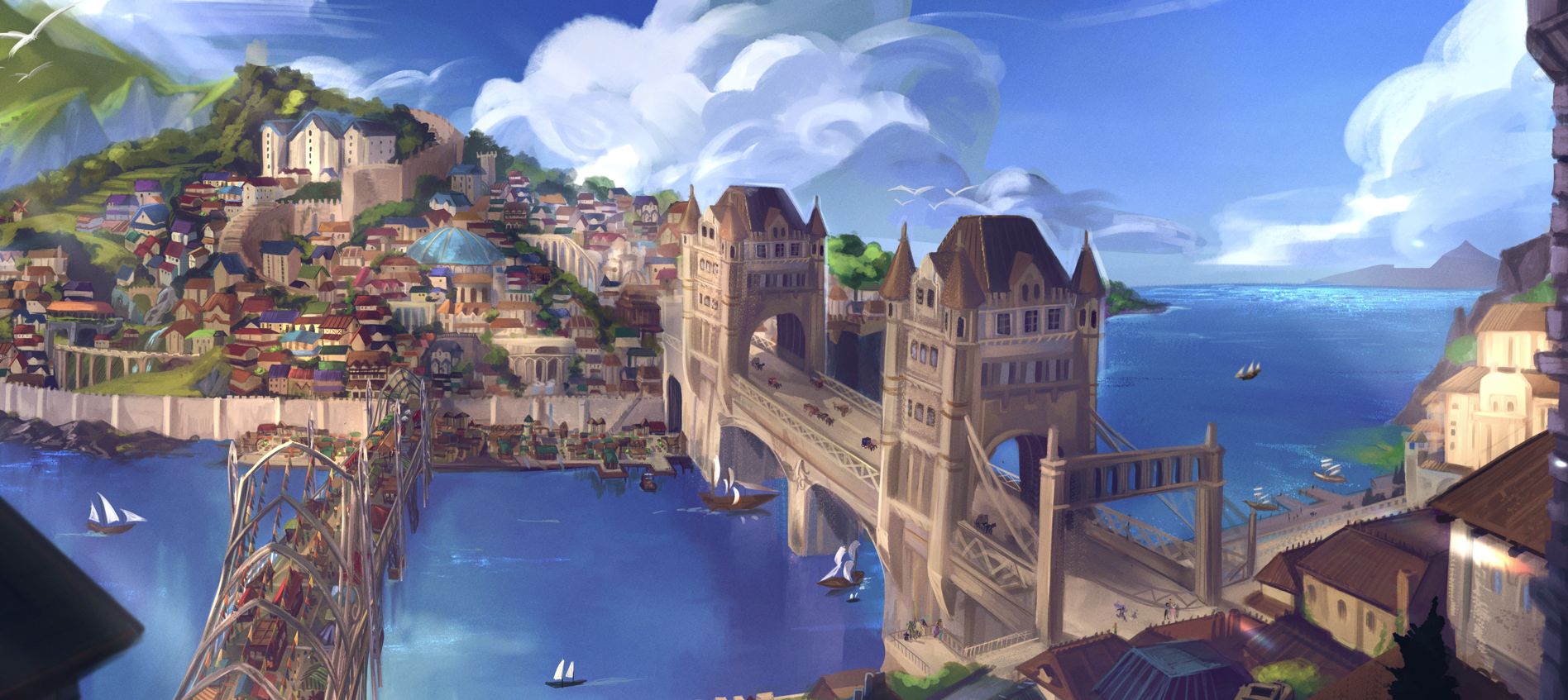
Five years had passed since Jean Shereef first set foot in the harbor offices of Nero's Port as its new master, and the transformation was nothing short of remarkable. What had once been a rough but predictable port town had evolved into something entirely unique—a merchant city that operated by the laws of blade and coin, where disputes were settled not in courts but in carefully regulated circles of sand.
The Dueling Grounds had become the heart of New Nero, as the locals had taken to calling it. Located in what was once the town square, the circular arena was ringed with tiered seating capable of holding nearly a thousand spectators.
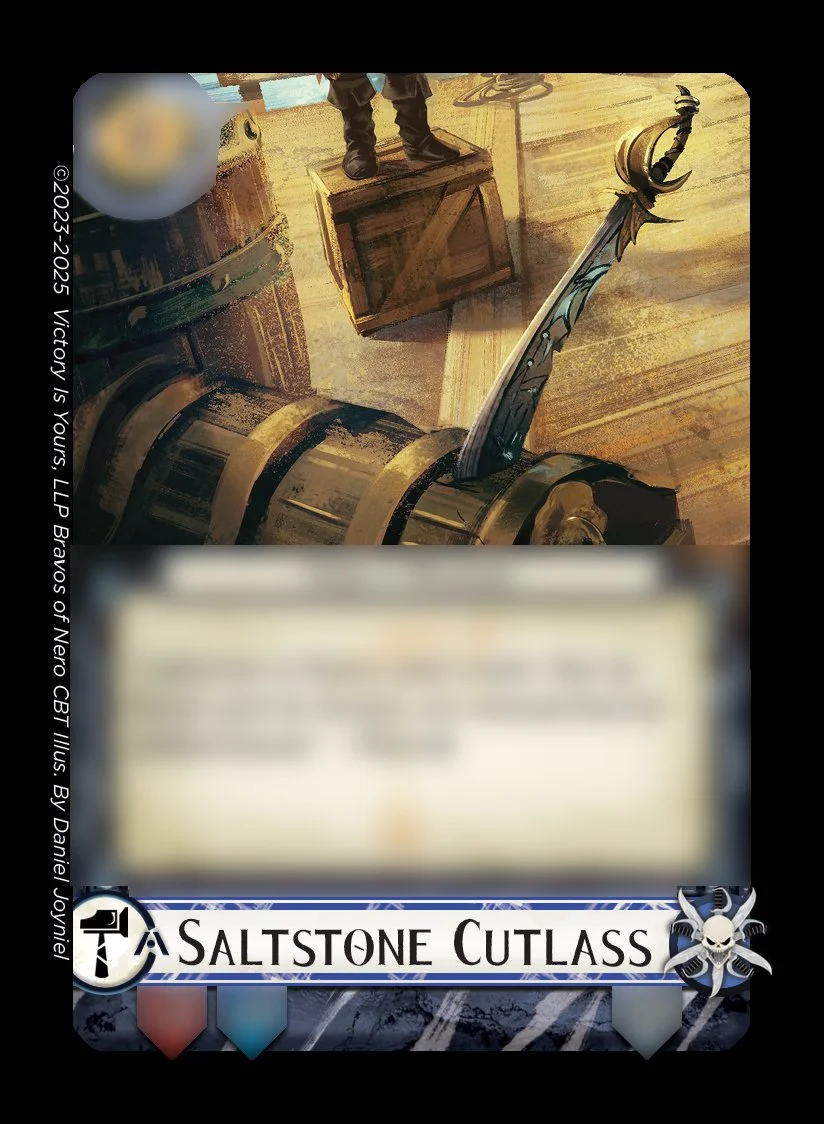
The morning sun cast long shadows across the carefully raked sand as Captain Willem Hardwick adjusted the grip on his cutlass, studying his opponent across the circle. Hardwick was a lean, hard-faced man in his early forties, all sharp angles and weathered lines, with high cheekbones and a narrow jaw that gave his features a wolfish cast. His pale eyes seemed almost too large for his gaunt face, set beneath brows permanently creased by years of squinting into sea spray and sunlight. Wind-tangled sandy hair, streaked faintly with gray at the temples, hung just long enough to brush the collar of his worn coat, and when he smiled—which he did now, thin and unsettling—it was the expression of a man who had spent a lifetime fighting and had come to enjoy it.
“Gentlemen,” Andre’s voice boomed across the grounds, his Hemalyphian frame appearing even more imposing from the elevated judge’s platform. “You both understand the terms. Captain Hardwick claims exclusive trading rights to the disputed northern routes. Merchant Valdez”—the dark-haired trader stood poised across the sand, his lean frame draped in fine but practical travel leathers, sharp features framed by a neatly trimmed beard and intelligent brown eyes that held a hint of dangerous charm—“contests this claim. The winner takes all contested assets. The loser accepts exile from Nero for one full year.”
It was a typical Tuesday morning dispute, the sort that would have once festered for months in legal proceedings or erupted into costly gang warfare. Now it would be settled in minutes, witnessed by a crowd that had already placed their bets and would see justice served with their own eyes.
Shereef watched from his private box, a structure of polished wood and brass that offered perfect views of the proceedings. Beside him sat Fecinii Goldar a lazuli man of nefarious design, one of Nero's wealthiest merchants and a man who had insisted proxies be legal in the dueling system. Fecinii also benefited from being among Jean’s inner circle.
"I still remember when you first proposed this madness," Fecinii murmured, his eyes never leaving the combatants as they began their deadly dance. "I thought you'd destroy the city within a month."
"And now?" Shereef asked, though he could read the answer in the man's satisfied expression.
"Now I'm richer than I ever dreamed possible." Fecinii gestured toward the arena where Hardwick had just landed a decisive blow, sending Valdez to his knees. "Disputes resolved quickly, contracts honored immediately, and the betting alone brings in more revenue than the old port taxes ever did."
The evolution hadn't happened overnight. In the first months after assuming control, Shereef had faced the same problems that plagued every port city: endless disputes over contracts, territorial rights, debt collection, and trading privileges. The traditional approach would have been to lean into the establish courts and hire more magistrates, but Shereef understood his constituency better than that.
Pirates and merchants alike respected strength and honored agreements backed by steel. So instead of judges, he appointed Master Duelists such as Monty Inigo—skilled fighters who served as both referees and executors of the city's new code. Instead of lengthy legal proceedings, he instituted the Challenge System, where any dispute worth more than fifty gold pieces could be settled by combat.
The rules were simple but comprehensive. Any resident of Nero could issue a formal challenge over matters of business, honor, or territory. The challenged party could either accept the duel, forfeit their claim, or hire a champion to fight in their stead. This last provision had proven crucial—it meant that merchants who lacked fighting skills could still participate in the system by employing the city's growing population of professional duelists.
Abari Caask adjusted his leather gloves as he stepped into the afternoon circle, hired to represent the interests of House Melliam in a dispute over warehouse space. The towering Ora’Kresh cut an imposing figure even among professional champions—white scales catching the sunlight along his broad, six-and-a-half-foot frame, his draconic features set in the calm focus of a veteran duelist. Across from him stood his opponent, a scarred dydelon veteran named Geoff Webb, fighting on behalf of the Seething Tide Trading Company. Webb was thick-shouldered and weathered from years of hard campaigns, his close-cropped hair already graying at the temples and a jagged scar pulling slightly at the corner of his mouth when he frowned. Both were well-known champions who commanded premium rates for their services.
"Five hundred gold on Caask!" called out a voice from the crowd.
"I'll take that bet!" came the immediate response.
The betting had become as integral to the system as the fighting itself. Shereef had formalized it early on, establishing official odds-makers and taking a percentage of all wagers. It was a brilliant solution to multiple problems—it generated revenue for the city, gave spectators a personal stake in each duel, and created a market-based system for evaluating the worth of different fighters and the disputes they represented.
But perhaps the most significant change was the emergence of what locals called the "Bravo’s"—individuals who had accumulated significant wealth and power not through birth or traditional business acumen, but through their success in the dueling system. Some were fighters themselves, warriors who had parlayed their skills into commercial empires. Others were shrewd investors who had mastered the art of backing the right champions and backing the right causes.
Lady Scarlett Herring was perhaps the most successful of this new breed. A former ship's navigator who had never held a sword in anger, she had built her fortune by studying fighters, analyzing their techniques and patterns, and placing increasingly sophisticated bets on the outcomes of their duels. Within three years, she owned interests in twelve different trading companies, three taverns, and had a stable of champions on permanent retainer.
"The secret," she explained to a group of newcomers over dinner at the Golden Anchor, "isn't predicting who will win a single fight. It's understanding the larger patterns, the economic forces that drive these disputes. When I see Captain Morrison challenging the Glowing Coast Trading Company over shipping routes, I'm not just watching two men fight. I'm seeing the collision of two different approaches to maritime commerce, and I bet accordingly."
Her success had inspired dozens of imitators, creating a new class of professional fight analyzers, statisticians, and what some called "violence economists." They studied fighting styles with the dedication of scholars, maintained detailed records of every duel, and developed increasingly sophisticated methods for predicting outcomes.
The results were undeniable. Trade through Nero had increased by nearly three hundred percent over the five years. The city's population had doubled. New businesses opened weekly, drawn by the promise of rapid dispute resolution and the opportunities created by the constant circulation of wealth through the betting system.
But it came at a cost that became more apparent with each passing season.
Captain Shereef, the letter read, delivered by a nervous young clerk, "I write to protest the treatment of my son, Melvin Fenwick, who was killed in a duel over what amounted to a fifty-gold debt. In any civilized society, such disputes would be handled through negotiation or, at worst, a fine. Instead, my boy is dead, and his killer walks free because he was 'defending his honor' according to your barbaric code."
Such letters arrived weekly. Families destroyed by duels gone wrong. Young men and women lured by the promise of quick riches only to find themselves in over their heads. The system that had brought prosperity to Nero had also institutionalized violence in ways that even hardened pirates sometimes found disturbing.
Andre brought the morning reports to Shereef's office, his expression troubled. "Three deaths yesterday, Captain. A grain merchant, a ship's cook, and Maria Santos."
Shereef looked up sharply. "Santos? But she was one of our best champions."
"Caught a blade through the ribs in what should have been a routine warehouse dispute. Her employer is claiming foul play, says her opponent used a poisoned weapon."
"And your investigation?"
"Inconclusive. But that's not the real problem." Andre's massive frame seemed to slump slightly. "Santos represented seven different merchant houses. With her death, they're all scrambling to find new champions, and the prices are getting... excessive."
This was the paradox that Shereef had not fully anticipated. Success in the dueling system required not just skill, but also reputation and availability. As demand for quality champions increased, their prices rose accordingly. What had begun as a democratizing force—allowing anyone to seek justice through combat—was increasingly becoming a rich man's game.
The finest duelists now commanded retainers that exceeded the annual income of most merchants. Merchants and houses like Melliam and Seething Tide maintained private armies of fighters, while smaller operators found themselves effectively shut out of the system by economic realities.
"We're creating exactly what we sought to avoid," Shereef admitted to Andre as they walked the docks on a foggy morning. "A system where money determines justice."
"But the alternative?" Andre gestured toward the bustling harbor, where ships from a dozen different nations were loading and unloading cargo. "We could go back to the old ways—months of litigation, corrupt magistrates, and disputes that dragged on for years. At least now, things get resolved."
It was true. For all its flaws, the dueling system worked. Merchants knew that contracts would be enforced, that disputes would be settled quickly, and that the city would maintain enough stability to make long-term investment worthwhile. The question was whether the cost—measured not just in gold but in blood—was sustainable.
By the fifth year, the system had evolved in ways that even Shereef hadn't predicted. Professional dueling schools had opened throughout the city, training not just fighters but also strategists, analysts, and negotiators. The Bravo Quarter had become a destination for wealthy thrill-seekers from across the known world, who came to wager on fights and sample the unique culture that had developed around institutionalized combat.
But perhaps most significantly, the threat of violence had paradoxically reduced its actual occurrence. When both parties in a dispute knew that escalation could lead to a potentially fatal encounter, they were far more motivated to negotiate reasonable settlements. Many challenges were withdrawn before reaching the dueling grounds, resolved through compromise rather than combat.
"The beauty of the system," Shereef explained to a visiting dignitary from Venico, "is not that we fight more duels, but that we fight only the ones that truly matter. When men know that their disputes may be settled with steel, they become remarkably creative in finding peaceful solutions."
As the sun set over Nero on the fifth anniversary of his rule, Jean Shereef stood once again on the balcony of his quarters, watching ships come and go in the harbor. The city had prospered beyond his wildest expectations, but it had also become something he wasn't entirely sure he recognized—a place where coin and blade determined fate with equal measure, where justice was swift but not always just, and where the strong truly did rule over the weak.
"Second thoughts, Jean?" Andre asked, joining him at the rail.
"Not second thoughts," Shereef replied slowly. "But thoughts about what we've built here, and what it might become. We've created a system that works, Andre, but systems have a way of outliving their creators. The question is whether what we've made will serve the city well after we're gone, or whether it will consume itself."
In the distance, the lights of the Dueling Grounds flickered to life as preparations began for the evening matches. Somewhere in the city, champions were practicing their forms, merchants were calculating odds, and disputes were being weighed against the cost of their resolution.
The new Nero thrived, but like all cities built on the edge of a blade, its prosperity balanced on the sharpest of edges.